
3DO





Website Temporary Closed
Hello everyone. We are moving to a new, bigger premises so website ordering will be closed for the next month while we move everything to our new building, reorganise and do a full stock take. We will not be taking any orders or able to reply to any messages during this time.
We will be open again at the start of December.
Many thanks.
Console Passion
Buy 3do For Sale at Console Passion
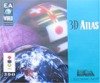 A multimedia expedition to understanding planet Earth. Examine the world in three different visual contexts - environmental, physical and political with nine zoom levels of detail. Time lapse photography with 3D flights and views of areas of the planet. Mini documentaries from global warming to endangered species. View country post cards and...
yes
yes

|
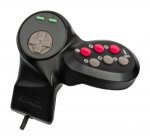
A uniquely-designed fighting game controller for the 3DO video game console, produced by Capcom primarily for their Super Street Fighter 2 video game on the system. This item is unboxed, tested and works fine.
no
no
|
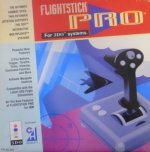 FLIGHTSTICK PRO for 3DO systems is an extended analog joystick that offers a full range of combat features and four-way viewing allowing total command of the player's vehicle. FLIGHTSTICK PRO features top gun precision, a realistic professional jet grip, responsive throttle control, durable components and a sturdy base.
yes
yes
|
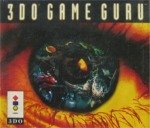
Ultra rare 3DO Game Guru. features 3DO Video Game Enhancer - Exposes Hidden Game Features, 3DO Storage Memory Utility - Compresses save game storage space and 3DO Built in Decoder - find Cheat Codes. Works with all 3DO games.
yes
yes
|
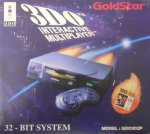
Goldtsr 3DO Console Boxed. The 3DO comes with great sound and more colours than any other console of its time. 32bit RISC CPU. Up to 16 million colours graphics power. 64 million pixel animation per second. Full screen, full colour digital video. CD stereo sound. Multi CD capacity. Double Speed CD-ROM. Two Expansion Slots. This console comes...
yes
yes
|
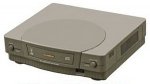 The 3DO comes with great sound and more colours than any other console of its time. 32bit RISC CPU. Up to 16 million colours graphics power. 64 million pixel animation per second. Full screen, full colour digital video. CD stereo sound. Multi CD capacity. Double Speed CD-ROM. Two Expansion Slots. This console is unboxed with AV leads, controller...
no
no
|
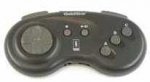 The Official Goldstar Controller. This is an official replacement for the controller that comes packaged with the Goldstar 3DO console. This item is loose and in good working order.
no
no
|
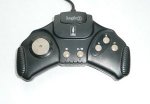 Third party 3DO controller made by Logic 3. This is a good sturdy replacement for the controller that comes packaged with your 3DO console. This item is loose and in good working order.
no
no
|
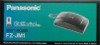 The Official Panasonic Mouse. This is an official Panasonic mouse for use with any 3DO console. Very hard item to find, especially boxed and we have very limited numbers. This item is boxed with instructions and in good working order.
yes
yes
|
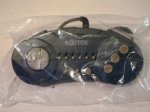 A Nakitek 3DO Controller. This is an official replacement for the controller that comes packaged with the 3DO console, and has many more buttons and features than the normal controller. This item is loose and in good working order.
This item is brand new and unopened from it's bag
no
no
|
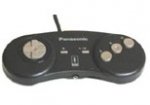
The Official Panasonic Controller. This is an official replacement for the controller that comes packaged with the Panasonic 3DO console. This item is loose and in good working order.
no
no
|
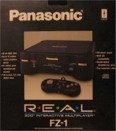
The 3DO comes with great sound and more colours than any other console of its time. 32bit RISC CPU. Up to 16 million colours graphics power. 64 million pixel animation per second. Full screen, full colour digital video. CD stereo sound. Multi CD capacity. Double Speed CD-ROM. Two Expansion Slots. This console comes boxed with controller,...
yes
yes
|
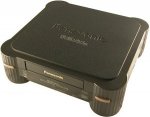
The 3DO comes with great sound and more colours than any other console of its time. 32bit RISC CPU. Up to 16 million colours graphics power. 64 million pixel animation per second. Full screen, full colour digital video. CD stereo sound. Multi CD capacity. Double Speed CD-ROM. Two Expansion Slots. This console is unboxed with AV leads, controller...
no
no
|
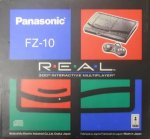
Panasonic FZ10 Console Boxed. The 3DO comes with great sound and more colours than any other console of its time. 32bit RISC CPU. Up to 16 million colours graphics power. 64 million pixel animation per second. Full screen, full colour digital video. CD stereo sound. Multi CD capacity. Double Speed CD-ROM. Two Expansion Slots. This console comes...
yes
yes
|
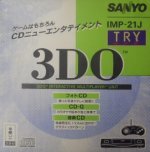 Rare Japanese Sanyo IMP 21J 3DO Console. The 3DO comes with great sound and more colours than any other console of its time. 32bit RISC CPU. Up to 16 million colours graphics power. 64 million pixel animation per second. Full screen, full colour digital video. CD stereo sound. Multi CD capacity. Double Speed CD-ROM. Two Expansion Slots. This...
yes
yes
|
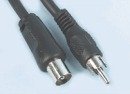 An unbranded but brand new RF lead that will substitute the one that came with your console. Connects your machine to the TV - an ideal replacement if the original one that came with your console is lost or faulty. Length is one metre. This item is fully tested and is brand new.
no
no
£6
|
 Your quest for truth drives you to investigate the mysteries of Derceto, this strange house. You'll encounter hideous, hidden monsters that come at you when you least expect them. From the creaking stairs to the dark catacombs, the 3DO experience plunges you into the depths of Derceto. Too late to turn back, you must go on and face it alone. and...
yes
yes
|

Once more Edward Carnby is involved in a mysterious and supernatural investigation. A little girl named Grace Saunders has been kidnapped by One Eyed Jack, the infamous gangster. And once more, Carnby is alone. alone in the dark!
yes
yes
|
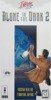 Once more Edward Carnby is involved in a mysterious and supernatural investigation. A little girl named Grace Saunders has been kidnapped by One Eyed Jack, the infamous gangster. And once more, Carnby is alone. alone in the dark!
This is the big box version.
yes
yes
|
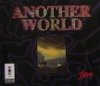
A futuristic adventure - now available for modern day viewing on the 3DO. The 3DO's graphics system brings game play to your fingertips with exceptional picture quality and a quicker more dynamic pacing. Interactive sound effects and a stunning musical score brought to you by respected Hollywood artists fully engage the 3DO's vibrant...
yes
yes
|
 Three times more special moves per character than your flat 2D fighting games! Nine hilarious and vicious characters. Eight killer bosses. Each character has the ability to morph into any other character.
yes
yes
|
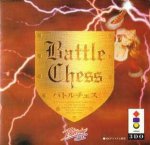 This is a Japanese 3DO import but it will run on any 3DO machine
Complete with Spine Card
yes
yes
|
 Players climb into a high tech tank, grab a ball and compete to put points on the scoreboard. Hyper fast arcade action that's only available on the 3DO system. Play one or two player matches, or go head to turret against a series of aggressive computer opponents, each with their own explosive game plans.
yes
yes
|

BC Racers - it's pre-hysterical. Cool n' crazy Cliff Ace is getting in some quality time with his cave-babe Roxy as they speed n' smash their way on a dino-powered dirtbike through 32 howlin' heats in a madcap 3D cartoon race e against a hard rock host of rocky racers!
yes
yes
|
 Blast off into a futuristic world of exciting three dimensional cities and take aim at your opponents with your arsenal of deadly weapons. Deploy six different directional modes as you zoom through the skies of Meggagrid. Each level contains over 1,000 screen images.
yes
yes
|
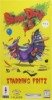 A hilarious ground-breaking interactive adventure that sets the new standard in animated cartoon action! Deep in the bowels of the sinister castle, evil is brewing. As Lance, the worlds hippest computer repair guru you're called to the mysterious castle of the disembodied brain, Dr. Nero Neurosis. You learn of the Doctor's master plan. There's no...
This is the big box version.
yes
yes
|







Log on
Facebook Log on
One-click login with your Facebook account

 Save time Save time | |
| One-click login |
x
Just In!
|
- 3DO
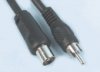 An unbranded but brand new RF lead that will substitute the one that came with your console. Connects your machine to the TV - an ideal replacement if the original one that came with your console is lost or faulty. Length is one metre. This item is...
|