
Nintendo 64





Website Temporary Closed
Hello everyone. We are moving to a new, bigger premises so website ordering will be closed for the next month while we move everything to our new building, reorganise and do a full stock take. We will not be taking any orders or able to reply to any messages during this time.
We will be open again at the start of December.
Many thanks.
Console Passion
Buy Nintendo 64 For Sale at Console Passion
 Experience the intensity of being the worlds top secret agent. Equipped with a full arsenal of Q-Lab gadgets and weaponry, you must be suave, resourceful, and lethal as you carry out action packed missions based on the actual blockbuster movie. Are you cool enough under pressure? Cunning when necessary? Course you are - you're Bond. James Bond.
yes
yes
Eurocom

|
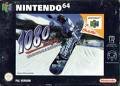
You're taking a Tahoe 155 snowboard down a steep, bumpy incline at night and you're about to top off an Indy Nose bone with a 360 degree Air, and you haven't even left your living room!
yes
yes
Nintendo
£20
|
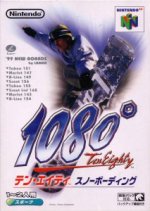 This is a Japanese Nintendo 64 import that will only run on a Japanese console, or a console with the Passport 3 Adapter.
yes
yes
|

As hopeful hero Flik, you're the colony's last chance against the seed-grubbing grasshoppers. Run, fly, kick, squish, and slide through fifteen challenging levels of 3D animated game play. Outmanoeuvre thirteen types of enemies, including The Bird and his deadly beak. Then throw your weight around with tough antics like the Berry Attack...
yes
yes
Traveller's Tales
|
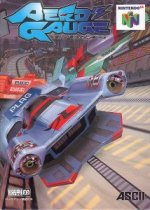 This is a Japanese Nintendo 64 import that will only run on a Japanese console, or a console with the Passport 3 Adapter.
yes
yes
|
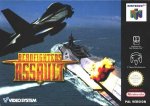 The AeroFighters Assault team needs your help to save the Earth from the evil Phutta Morgana and their machines of doom. Engage a variety of enemy aircraft and boss characters around the globe in multiple missions. Join the battle in the only game that matters!
yes
yes
Paradigm Entertainment
|
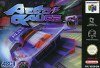
With courses that have sharp turns, and even sharper obstacles, it's going to take a keen eye and ultimate control to manoeuvre through canyons, tunnels, oceans and mountains. Imagine speeds reaching over 1000mph as you whizz by the field on route to victory in these graphically advanced landscapes.
yes
yes
Pacific Coast Power & Light
|
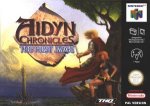 Young Alaron is on a quest to discover the truth about himself, his name, and his heritage. Traveling to far and distant lands, pursued by forces he cannot understand, danger lurks around every corner. Alaron and his companions will seek to fulfill his destiny as the greatest mage ever.
yes
yes
H2O Interactive
|
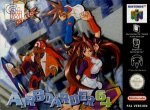 The year is 2064. The snowboard and skateboard of the previous century have evolved into an AirBoard that hovers about 50cm above the ground. This AirBoard can be ridden over ground, over water and even along the walls of buildings or from roof top to roof top! There are no courses in Airboarder 64 that must be strictly followed, so you are free...
yes
yes
Human Entertainment
|
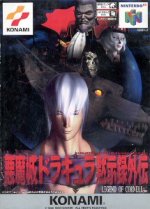 This is a Japanese Nintendo 64 import that will only run on a Japanese console, or a console with the Passport 3 Adapter.
yes
yes
|
 Challenge some of the biggest names in Tennis with the 3D simulation game that serves up all the excitement of real Tennis gameplay minus the sweat! twelve different players with special moves. Eight courts. Multiplayer options allows up to four people to play at once.
yes
yes
Smart Dog
|

All-star realism. Hi-Rez graphics - so real you'll think you are in the ball park. All 30 Major League teams and over 700 MLBPA players. The only four player baseball game for the N64. Trade, create, sign and release players, set pitching rotations and line-ups, create new teams, scout players and call up minor league prospects.
yes
yes
Acclaim
|
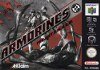 Human domination or bug infestation? The choice is yours. You're an Amorine. You're wearing the latest in futuristic battle-armour. Armed with a devastating arsenal, you've got 120 hours to stop and all-out bug invasion of Earth. Or die trying.
yes
yes
Acclaim
|
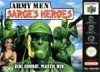
Confidential. 0600 hours: Tan forces captured Brava Company Commandos. General Plastro has new weapons of mass destruction: magnifying glass, M-80 firecrackers and the garbage disposal. This is a job for Sarge. Requisition M-60s, shotguns, bazookas, flame throwers, grenades, sniper rifles, mortars, mine sweepers and plenty of ammo. Good luck,...
yes
yes
by 3DO
|
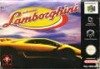
Are you ready for the ride of your life? This car circuit racing game will have you driving the car of your dreams - a Lamborghini Diablo! Trade in your eco-car and burn up the fast lane! You'll have a chance of four different race styles, challenging race tracks, manual or automatic transmission and other options such as pit stops and multi...
yes
yes
Titus Software
|
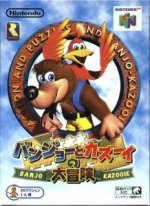 This is a Japanese Nintendo 64 import that will only run on a Japanese console, or a console with the Passport 3 Adapter.
yes
yes
|
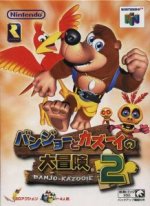 This is a Japanese Nintendo 64 import that will only run on a Japanese console, or a console with the Passport 3 Adapter.
yes
yes
|

Trouble is brewing on Spiral Mountain! Gruntilda the witch, wildly jealous of Tooty the Honey Bear's good looks, is determined to steal them for herself! But even as she whisks the helpless youngster off to her tower, Tooty's big brother Banjo and his loud mouthed partner Kazooie are hot on the trail to rescue her..
yes
yes
Rare
|

With this bad news, Banjo and Kazooie are back with all their well known moves and dozens of new ones, ready for the impending battle.
yes
yes
Rare
|

Embark in Batman of the Future, a blazing Ninja-style action game in twenty-first century Gotham City. Be Batman! Combat evil villains with his special skills! Test yourself. and test Batman's new high tech weapons to the max! Experience changing perspectives! Stunning graphics! Action filled gameplay!
yes
yes
Kemco
|
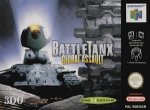 The year is 2006. The world has become a post-apocalyptic wasteland. While Griffin and Madison struggle to rebuild society, they realize their young son possesses telekinetic powers that are the key to the future. But the evil QueenLord, Cassandra, plans to use the boy's powers for her own wicked scheme. With only armored tanks at your command,...
yes
yes
|
The adventure begins when you leave the road. Smashing, bashing fun. Crash and Dash. Ultra-fast Nitro Blast. Incredible shortcuts! Go Anywhere! Choose your own routes and find surprises at every turn. Do Anything! Grab big-time air and engage in four-car mayhem!
yes
yes
Paradigm Entertainment
£26
|
Choose from eight F.R.E.A.K.S. Each is armed for battle with his or her own deadly arsenal, including pulse lasers, grenade launchers, stun guns, swords and machine guns. Battle in the three story, multi-tiered arenas! Watch out for hazards such as lavapits, meat grinders and spinning blades.
yes
yes
Saffire
|
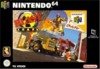
A pair of defective nuclear missiles, en-route to a safe detonation site has begun to leak. Badly damaged, the carrier automatically locks onto the most direct route. Clear a path to help the carrier arrive safely. Tons of vehicles are at your disposal. Leave nothing standing or the adventure will end in an Earth shattering explosion! Find the...
yes
yes
Rare
£20
|
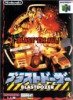 This is a Japanese Nintendo 64 import that will only run on a Japanese console, or a console with the Passport 3 Adapter.
yes
yes
£14
|
 Elwood Blues in back! Just out of prison, he's got only one idea in his head: Reforming his band! Lots of mini-games and musical puzzles. Dance duels. Four worlds dominated by action, each of them divided into five levels packed with obstacles. Gameplay based on music and dance with all the humour, soul and fun of the Blues Borthers.
yes
yes
Player 1
|







Log on
Facebook Log on
One-click login with your Facebook account

 Save time Save time | |
| One-click login |
x
Just In!
|
- Nintendo 64 (NTSC-J)
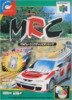 This is a Japanese Nintendo 64 import that will only run on a Japanese console, or a console with the Passport 3 Adapter.
|