
Philips CDI




Website Temporary Closed
Hello everyone. We are moving to a new, bigger premises so website ordering will be closed for the next month while we move everything to our new building, reorganise and do a full stock take. We will not be taking any orders or able to reply to any messages during this time.
We will be open again at the start of December.
Many thanks.
Console Passion
Buy Philips cdi For Sale at Console Passion
 Snuffy's cave is full of surprises! Help him play 'Snuffy Says' and call big bird on the telephone. Come visit Big Bird in his nest.! Make up rhymes and read a story.
yes
yes
£5

|

The count has a nifty number game that you can play in his castle! Help him solve number riddles and find his friendly bats. Ernie and Bert want to share their toys with you! Listen to the radio with Bert and play a game with Ernie.
yes
yes
£4
|
 Now you are Alice and Wonderland awaits you. Mad Hatter, the Cheshire Cat, the Queen of Spades, and all the Wonderland characters are there.
yes
yes
|
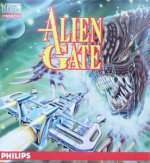 A terrifying evil is threatening the safety of your planet. Hordes of monsters are advancing through the Alien Gate with one objective in mind - the destruction of your world! Only you can ward off this danger. As a rocket fighter pilot, your coolheadedness will be tested to the utmost. The last battle has begun.
yes
yes
|
 Take a trip with hex into an interactive ambient experience. AntiStatic is an entrancing audio-visual journey through custom fractal landscapes Beautiful 2D animations and a mix of techno-classical ambient music. Dive into deep interweaving currents of resonating sounds and images. Swim and fly in open rhythmic streams along bio-dynamic circuits....
yes
yes
|
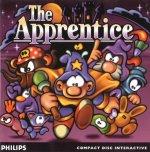 As Marvin the apprentice of the great wizard Gandorf S Wandburner III you’ve not been having a good week. You must undertake all the dangerous tasks that the wizard cannot be bothered to do himself. This Platform game is the story of a week in your life.
yes
yes
|
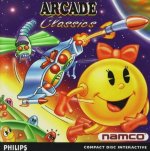 Remember the good old days spending hours behind the arcade machine? These days are back ‘Arcade Classics’ has 3 all time classic games form the time that game play was number 1: Ms. Pac-Man, Galaxian and Galaga!
yes
yes
|
 Julius Caesar doesn't find it funny. Not at all! He has decided to stop our friends from leaving their village. Take up the challenge launched by Caesar!
yes
yes
|
 The parole officer has just made you an offer you cannot refuse. 'Shut down the reactor at the heart of the Atlantis resort and you can have your freedom'. Your reply. 'Where's my rocket launcher?' Twenty levels of mindless blasting!
yes
yes
|
 CDi Backgammon contains everything you need to play a game of backgammon: board, pieces, dice, doubling cube, even opponents! Your CDi player is ready anytime you feel like a quick game. Backgammon provides three animated opponents, each with a different skill level. Backgammon is easy to play. unsure of the rules? Backgammon prevents illegal...
yes
yes
£14
|
 You command a fleet of five ships. Your mission is to seek and destroy your enemy's ships before he destroys yours! Place your ships wherever you like or use the Deploy feature to automatically place them for you. Now seek out your enemy and destroy him!
yes
yes
£10
|
 The wondrous story of Beauty and the Beast is marvellously told by Mia Farrow, with entrancing music by Ernest Troost. this enchanting tale is set in a rich and glowing palace ruled by a beastly creature. Could anyone ever love such a Beast? Only a shy, beautiful girl who wants to save her Fathers life, and learns that what we are all bout to...
yes
yes
£7
|
 The annual Country Fair is coming to Bear Country, but no one has time to take Brother and Sister. Oh boy, are the Bear Cubs going to be upset! So Mama agrees to let them prove they can be responsible enough to go to the fair on their own. Children can join this story and visit delightful locations with over twenty games and learning activities...
yes
yes
|
 Sophie is snatched from her orphanage early one morning by the BFG (Big Friendly Giant), whom she witnesses engaged in mysterious activities, and whisked away to Giant Country. She is soon put at ease, as she learns that BFG's job is to collect, catalogue and deliver pleasant dreams to children. She joins him that night, but the mean giants follow...
yes
yes
|
 Bill (Alex Winter) and Ted (Keanu Reeves) are about to make the most awesome triumphant comeback in Rock ‘n Roll history. When the heinous De Nomols dispatches evil Bill and Ted robots to totally kill the San Dimas duo not only is the future of the universe at stake but, there’s like no way, these Wyld Stallynz can win Battle of the...
yes
yes
|
 Director Ridley Scott, who created two of Hollywood's most impactful and stylish adventure thrillers, Alien and Blade Runner, hits the mark again with Black Rain. Academy Award winner Michael Douglas and Andy Garcia play New York cops whose job to escort vicious assassin back to his native Japan leads the two Americans into Osaka's exotic...
This is a VCD which requires the VCD cartridge.
yes
yes
£7
|
 Everybody knew Brer Rabbit was the sassiest of creatures. But no one was prepared for what happened after Brer Fox tried to fricassee him for dinner! The hilarious battle of wits and the way in which Brer Rabbit finally triumphs make for a classic tale.
yes
yes
|
 Bryan Adams - Waking up the Neighbours includes Can't stop this thing we started, (Everything I do) I do it for You, All I want is You, Thought I'd died and gone to Heaven, There will never be another tonight, Do I have to say the words and Touch the Hand.
This is a VCD which requires the VCD cartridge.
yes
yes
£7
|
 Sol Cutter's latest data theft has gone straight to his head, along with the deadly virus Burn Cycle. Even now the virus is eating his brain from the inside out. As Sol Cutter, you have two hours to deactivate the virus using your brain - while you still have one! Burn Cycle features state of the art fully digitised live action...
This game can be used with the peace keeper revolver
yes
yes
|
 Your sports fantasy comes true in the boxing arcadestrategy game that puts you in the ring at the fabulous Caesars Palace, Las Vegas. Behind the scenes, the managers, trainers, reporters, high-rollers and groupies who make up your entourage offer advice, encouragement and temptation. Under the lights, the world is watching as you tape the gloves,...
This game is brand new and sealed
yes
yes
£10
|
 Experience the real sights and sounds of the Caesars Palace casinos. Hear the jingle of coins and the gasp of the crowd as you challenge the house. Motion picture quality graphics and high fidelity, stereo sound effects make you feel as if you're right in Las Vegas. Caesars World of Gambling gives you the thrill of high stakes gaming in your own...
yes
yes
|
 Our favourite Hanna Barbera characters take you to a carnival of fun! Match colours at Huckleberry Hound's Gift Emporium. Catch balloons with Fred at The Flintstone's Balloon Ballyhoo. Rescue Scooby from a haunted maze in Scooby Doo's Adventure Isle. Snatch silly sounds at Yogi Bear's Pic-nic Place. Capture stray satellites in The Jetson's Space...
yes
yes
|
|
Our favourite Hanna Barbera characters take you to a carnival of fun! Match colours at Huckleberry Hound's Gift Emporium. Catch balloons with Fred at The Flintstone's Balloon Ballyhoo. Rescue Scooby from a haunted maze in Scooby Doo's Adventure Isle. Snatch silly sounds at Yogi Bear's Pic-nic Place. Capture stray satellites in The Jetson's Space...
This game is brand new and sealed
yes
yes
£14
|
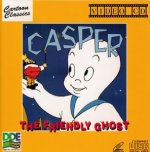 The worlds friendliest ghost and friends!
yes
yes
|
 The Zany adventures of that famous wacky duck!
yes
yes
|

Hours of interactive play awaits kids with Cartoon Juke Box. Now, favorite children's tunes like Pop Goes the Weasel, and Row, Row, Row Your Boat, come alive as never before. Each song is illustrated with dazzling original animation.
yes
yes
|







Log on
Facebook Log on
One-click login with your Facebook account

 Save time Save time | |
| One-click login |
x
Just In!
|
- Philips CDI
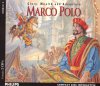 From the Holy Land to China from the foothills of the Himalayas to the outer reaches of the Gobi Desert, relive the adventures of Marco Polo’s travels along the Silk Route. Increase your wealth as your trade in arms, gold and precious stones...
|