
Amiga CD32




Website Temporary Closed
Hello everyone. We are moving to a new, bigger premises so website ordering will be closed for the next month while we move everything to our new building, reorganise and do a full stock take. We will not be taking any orders or able to reply to any messages during this time.
We will be open again at the start of December.
Many thanks.
Console Passion
Buy Amiga cd32 For Sale at Console Passion
 2019 Neo-Tokyo is about to explode! 30 years after World War 3, Kyoko a mutant child tells of the approaching cataclysm. The colonel stored capsule 7, which contains mutation 28, better known as Akira, deep below the Olympic Stadium at a temperature close to absolute zero. When Tetsuo makes his way to the stadium and the Akira pattern becomes...
This is the big box version
yes
yes

|
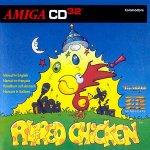 Oh No! The evil Meka-Chickens have egg-napped Billy Egg and his brothers for their terrible experiment, and they've taken Floella too! this is no yolk. As the worlds only chicken with a bionic beak, Alfred is whisked off to a multitude of bizarre lands to pluck his friends from the clutches of their foul captors.
yes
yes
|
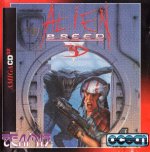
Over the last 4 years, the Alien Breed saga has become legendary amongst Amiga owners... now the series culminates in quite spectacular fashion - Alien Breed is now in 3D! Transported to a spectacular 3D environment, you must outwit the ferocious Breed once more, but this time the added dimension of 'being there' brings you even...
Includes a copy of the code book
yes
yes
|
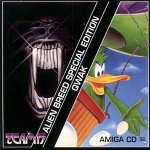
Alien Breed SE: Encounter spectacular arcade action as you take on the might of a terrifying alien army that has infested a federation research station. For one or two players, this stunning new edition of the now classic 'Alien Breed' game features huge levels, new missions and much, much more. That represents a supreme challenge to new...
yes
yes
|

In the depths of space a holocaust has occurred. Intelligent and hostile alien life forms have taken over the Military Research Unit in the planet Azarin 2E. Chaos and destruction have been wrought on the innocent colonists. Now it's your job to reclaim the station for humankind. Travel through the tractless voids of space, then endure over...
yes
no
|
 A boxed third Party Controller. An alternative to the official controllers, these pads come with extra slo-motion and autofire buttons to make game play that little bit easier! These pads are actually better than the original controllers that come with the CD32. This item is boxed, has been tested and works fine.
yes
yes
|
 A loose third Party Controller. An alternative to the official controllers, these pads come with extra slo-motion and autofire buttons to make game play that little bit easier! These pads are actually better than the original controllers that come with the CD32. This item is loose, has been tested and works fine.
yes
yes
|
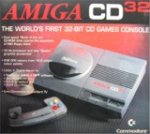
The Amiga CD32 Video Computer System - The worlds first 32 Bit CD Games Console. This console comes boxed with original controller, base unit, power supply & AV leads all internal packaging and instructions. The console has been tested, is in good condition and works fine.
yes
yes
|
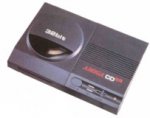
The Amiga CD32 Video Computer System. This console comes loose with controller, base unit, power supply & scart leads. The console has been tested and works fine.
no
no
|
 The Official Amiga CD32 Controller. This is an official replacement for the controller that comes packaged with the Amiga CD32 console. This item is boxed and in good working order.
yes
yes
|

The Official Amiga CD32 Controller. This is an official replacement for the controller that comes packaged with the Amiga CD32 console. This item is loose and in good working order.
no
no
|
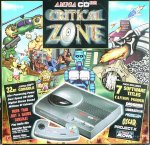 The Amiga CD32 Video Computer System - The worlds first 32 Bit CD Games Console. This console comes boxed with original controller, base unit, power supply RF leads. Also comes with a whopping seven games included - Cannon Fodder, Diggers, Oscar, Liberation, Microcosm, Project-X & Ultimate Body Blows. The console has been tested, is in good...
Missing inner packaging
yes
yes
|
 An unbranded but brand new RF lead that will substitute the one that came with your console. Connects your machine to the TV - an ideal replacement if the original one that came with your console is lost or faulty. Length is one metre. This item is fully tested and is brand new.
no
no
£6
|
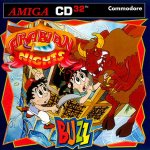 Sinbad Junior works for the 'fair and just' Caliph as an apprentice gardener tending to his incredibly excessive palace gardens. Today however he gazes upon another beautiful flower - the Princess Laila as she stands on a balcony high above the gardens. Away in an eerie floating castle dark deeds are at hand. The evil Vizier, his dastardly plan to...
yes
yes
|

Rack 'em up and shoot for glory in this stunning Pool Simulator featuring superb ball animation and authentic sounds that have been digitised to give you a greater feel. Different game types include: US eight ball, nine ball, straight pool & speed ball. Different game options such as rule modifications, UKUS ball sets, baize colour etc.
yes
no
|
 Take a classic arcade game. Add a whole heap of seasoning in the form of stylish, state of the art graphics and 4 massive levels of up-to-date action. Stir in an Alternative Dimension, exquisitely evil aliens and a heavy sprinkling of mucho big guns 'n' power propped planes. Leave to simmer on an incandescent heat and wait for the best BLAST in...
yes
yes
|
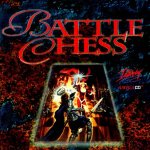 There is a darkness over the battlefield. The wind sighs gently and there, in the distance, comes the flash of lightening and the rumble of thunder. With a sudden gust of wind, your warriors appear: the King, the Queen, two each of Bishops, Knights and Rooks, and before them all, a row of Pawns. Waiting, your kind turns to you, ready to order his...
yes
yes
|

Featuring revolutions innovative Virtual Theatre system, Beneath A Steel Sky is a gripping science fiction thriller, set in a bleak vision of the future. Robert Foster is an innocent outsider stranded in a vast city where oppressed civilians live and work in the soaring tower blocks. while the corrupt, covetous and rich lie underground, shielded...
yes
yes
|
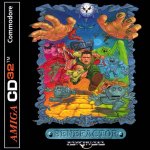 What makes him so good? Enigmatic, Mysterious, Dynamic. That's Ben E. Factor, a rugged adventurer who's always ready to lend a hand. Compelling, Engrossing, Addictive. That's Benefactor, a devilish brain teaser of a game with level after level of roving rescue action.
This is the big box version.
yes
yes
|
 Meet the funkiest feline on four legs, Brian the Lion, starring in the wildest adventure ever to hit the Amiga CD32. Brains rumble in the jungle boasts hundreds of fames of character animation, megabytes of music and a magnificent menagerie of console-style FX including zooming, sprite scaling, de-resolution and posterise. The scariest sight in...
This is the big box version.
yes
yes
|
 Do you like action but reckon that chainsaw massacres are for grannies tea parties? If you do then Brutal Sports Football is for you. League, knockout or unfriendly Tournaments. Football with a new set of rules - no rules! One or two player games. eleven different teams. Head to head, all out combat. Masses of pick ups. Laughs and blood. This is...
yes
yes
|
 Our goofy hero and his friend - an intelligent alien stick - have crash-landed on a weird planet after being captured by alien spacecraft. On order to get back to earth, Bubba must use Stix is a variety of different ways to solve puzzles, overcome adversaries and foil the comedic attempts of his kidnapper to recapture him in this multi-directional...
yes
yes
|

The speed! The thrills! The Spills! Glory goes to those who survive the ultimate racing experience - The Bump N Burn Championships!
yes
yes
|

Don't wait 'til you see the whites of their eyes. don't kid yourself it will be over by Christmas. don't try to shut out the screams. and don't forget to wash your hands afterwards. Cannon Fodder - war has never been so much fun!
yes
yes
|

Welcome to the world of Castles 2: Siege and Conquest. This game is intended to test your skills as an administrator, a military leader and a politician. The Lords of the territories battle each other in an attempt to expand their realms. When a Lord conquered new lands, he would build a castle there to substantiate his power over the newly...
yes
yes
|
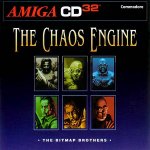
Sometime during the last century, an experimenter with time, space and early computers created a bizarre machine. The inventors name was Baron Fortesque, The machine was The Chaos Engine. Although primitive, the machine became incredibly powerful and went crazy, turning ordinary humans and household pets into razor toothed, armour plated killing...
yes
yes
|







Log on
Facebook Log on
One-click login with your Facebook account

 Save time Save time | |
| One-click login |
x
Just In!
|
- Amiga CD32 (PAL)

Gunship 2000 puts you in the pilot's seat of a modern helicopter gunship, flying across a visually accurate topographical 3-D world. This is your chance to battle through two massive combat theatres and to undertake missions that will test...
|